
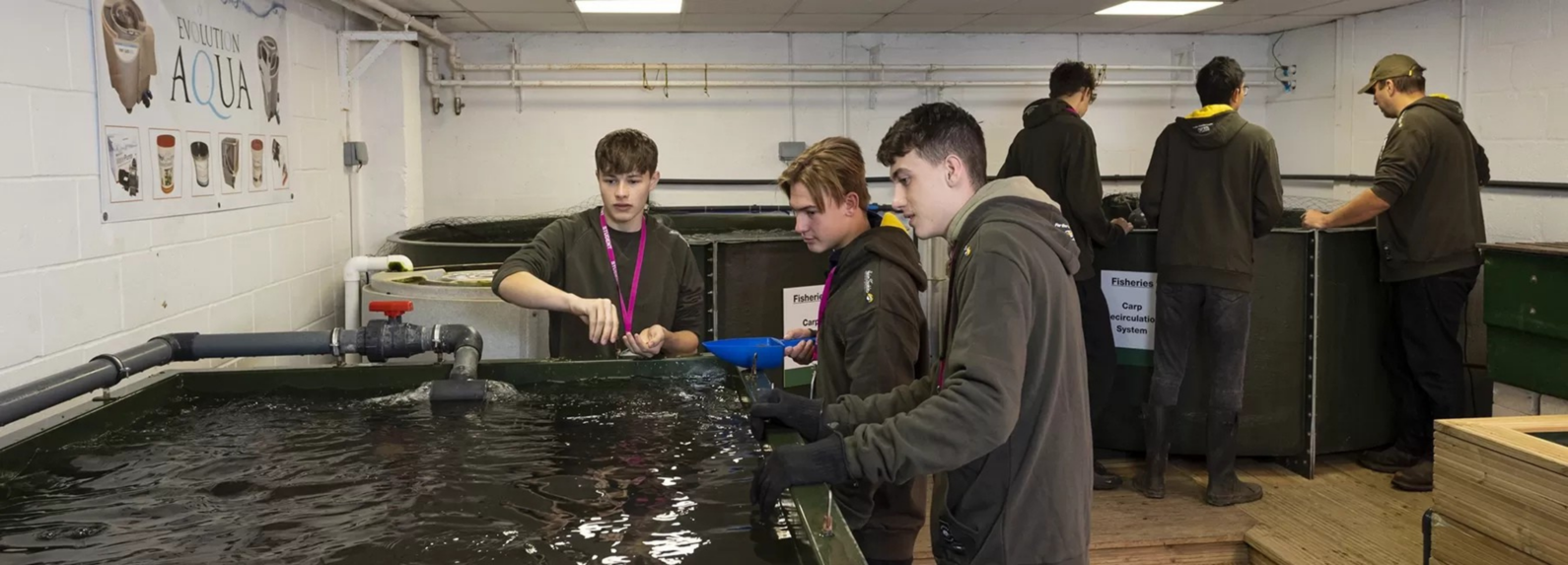
Want to make a difference in the future of our aquatic environments? Our Fisheries Management courses combine hands-on training with scientific learning, preparing you for a career in fisheries, aquaculture, conservation and environmental management.
At NKC Hadlow College, our Fisheries Management courses provide students with the practical skills and scientific knowledge needed to work within the fisheries, aquaculture and environmental sectors.
You'll learn from an experienced Fisheries team with expertise across a wide range of specialist areas, including freshwater fisheries management, fisheries construction, marine environments, fish health and disease, angling, fish farming and aquatics.
Throughout your course, you'll develop skills in:
Fisheries Management combines practical training with classroom-based learning, allowing you to apply scientific knowledge to real aquatic environments.
You'll also develop an understanding of sustainable fisheries practices, aquatic ecosystems and the relationship between fish, habitats and environmental management.
Our industry links with organisations including The Environment Agency, Angling Direct, London Councils, Cottington Lakes, Manor Fisheries and Coombe Bank Fisheries help ensure your learning reflects current practices within the fisheries and aquatic industries.
Whether you're looking to progress into employment, further study or a specialist environmental career, our supportive tutors and industry-focused approach will help you develop the skills and confidence needed to succeed.
Our Fisheries Management courses cover a wide range of practical and scientific topics, including:
You'll combine practical experience with scientific understanding, developing the skills needed to manage aquatic environments and support sustainable fisheries.
Aquaculture is the farming and management of aquatic organisms, such as fish.
Throughout the course, you'll develop knowledge and practical skills in modern aquaculture methods, fish farming and aquatic systems, gaining an understanding of how aquatic industries operate sustainably.
Yes. Fish health and biology are key parts of Fisheries Management.
You'll learn how to identify and understand fish health issues, explore disease prevention and treatment methods, and develop an understanding of how aquatic environments affect fish welfare.
Practical learning is an important part of our Fisheries Management courses.
You'll develop hands-on skills in areas such as:
These practical experiences help you build the confidence and industry skills needed for a career within fisheries and aquatic management.
You'll train using specialist fisheries and aquatic facilities, providing realistic environments where you can develop practical skills alongside your scientific knowledge.
These facilities support learning in areas such as fish health, aquaculture, aquatic ecosystems and fisheries management.
Yes. We work closely with a range of industry organisations to support learning and provide valuable insight into current fisheries and aquatic practices.
Our partnerships include The Environment Agency, Angling Direct, London Councils, Cottington Lakes, Manor Fisheries and Coombe Bank Fisheries.
These links help ensure students gain relevant, up-to-date knowledge and develop connections within the industry.
Fisheries Management courses can lead to a range of careers within fisheries, aquaculture, conservation and environmental sectors.
Progression opportunities may include roles in:
By combining practical experience, scientific knowledge and industry expertise, you'll develop the skills needed to progress within the fisheries and aquatic industries.